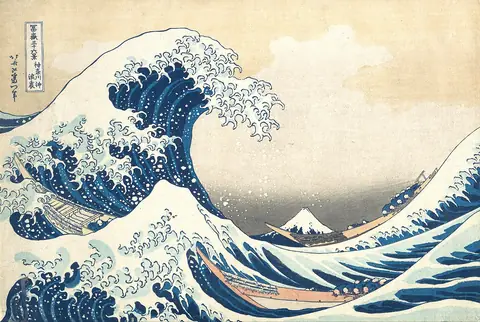
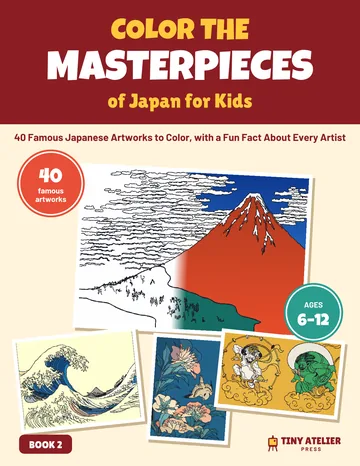
Cover of Color the Masterpieces of Japan for Kids, Book 2: half-colored Red Fuji with The Great Wave, Peonies and Canary and Wind God and Thunder God tiles

Book 2 · Tiny Atelier Masterpieces

Color the Masterpieces of Japan for Kids

40 Famous Japanese Artworks to Color, with a Fun Fact About Every Artist

  • 40 artworks
  • 90 pages
  • 8.5 × 11 in
  • Ages 6–12
  • Single-sided

List price: $9.99 (US) · £7.99 (UK) · €9.99 (DE / EU)

In review at Amazon KDP. The Amazon links appear here as soon as the paperback is live.

At a glance

Color the Masterpieces of Japan for Kids is Book 2 in the Tiny Atelier Masterpieces series from Tiny Atelier Press: a 90-page, 8.5 × 11 inch paperback coloring book for ages 6–12 with 40 line drawings of famous public-domain artworks by 17 artists. Each picture is printed single-sided and comes with the artwork's title, artist, date and a fact-checked fun fact.

From Hokusai's Great Wave and Red Fuji to Hiroshige's snowy bridges, golden folding screens, playful cats, puppies and frogs, this coloring book takes kids on a journey through more than 800 years of Japanese art. Every page is a careful line drawing of a real, famous artwork, with its name, the artist, when it was made and a fun fact to read and share.

The 40 artworks are by 17 artists, including Katsushika Hokusai, Utagawa Hiroshige, Utagawa Kuniyoshi, Kitagawa Utamaro, Itō Jakuchū, Ogata Kōrin, Ohara Koson and Hiroshi Yoshida, from 12th-century animal scrolls to 1930s prints. Every artist in the book died in 1950 or earlier, so all the artworks are in the public domain.

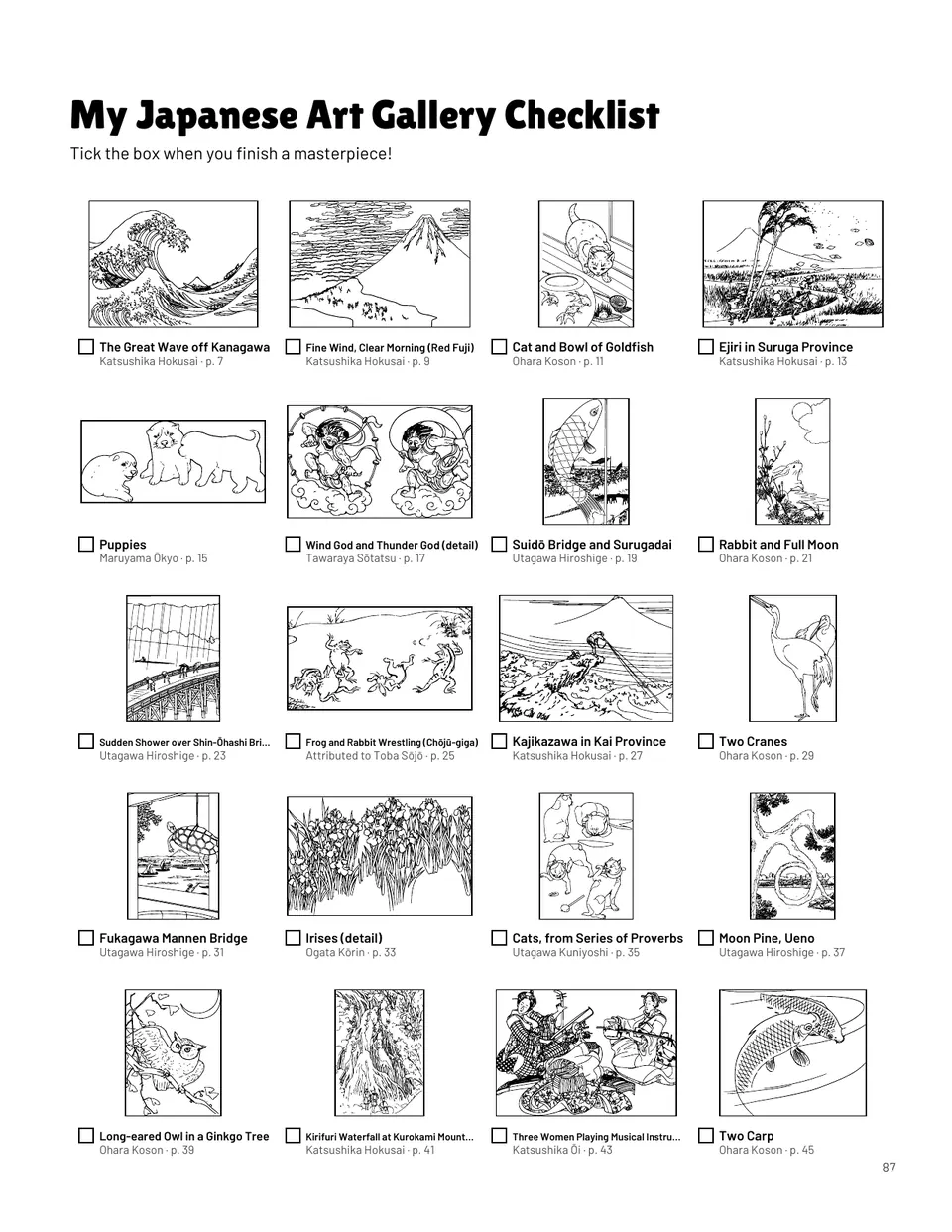
Each picture is printed on one side of the page with a blank back. Bonus pages include a color test page, a “My Japanese Art Gallery Checklist”, a “Draw Your Own Japanese Masterpiece” page and a Young Art Expert certificate.

  • 40 famous Japanese artworks. Woodblock prints, golden screens and scrolls by 17 artists, spanning more than 800 years.
  • A fun fact for every artist. Written for ages 6–12 and checked against museum and encyclopedia sources.
  • One picture per page. Printed on one side with a blank back, so markers won't ruin the next picture.
  • Big 8.5 × 11 in pages. Clean, bold lines drawn faithfully from the originals.
  • Bonus pages. A color test page, a gallery checklist, a “Draw Your Own Japanese Masterpiece” page and a certificate.
Look inside

Real pages from the book. Select a page to see it larger.

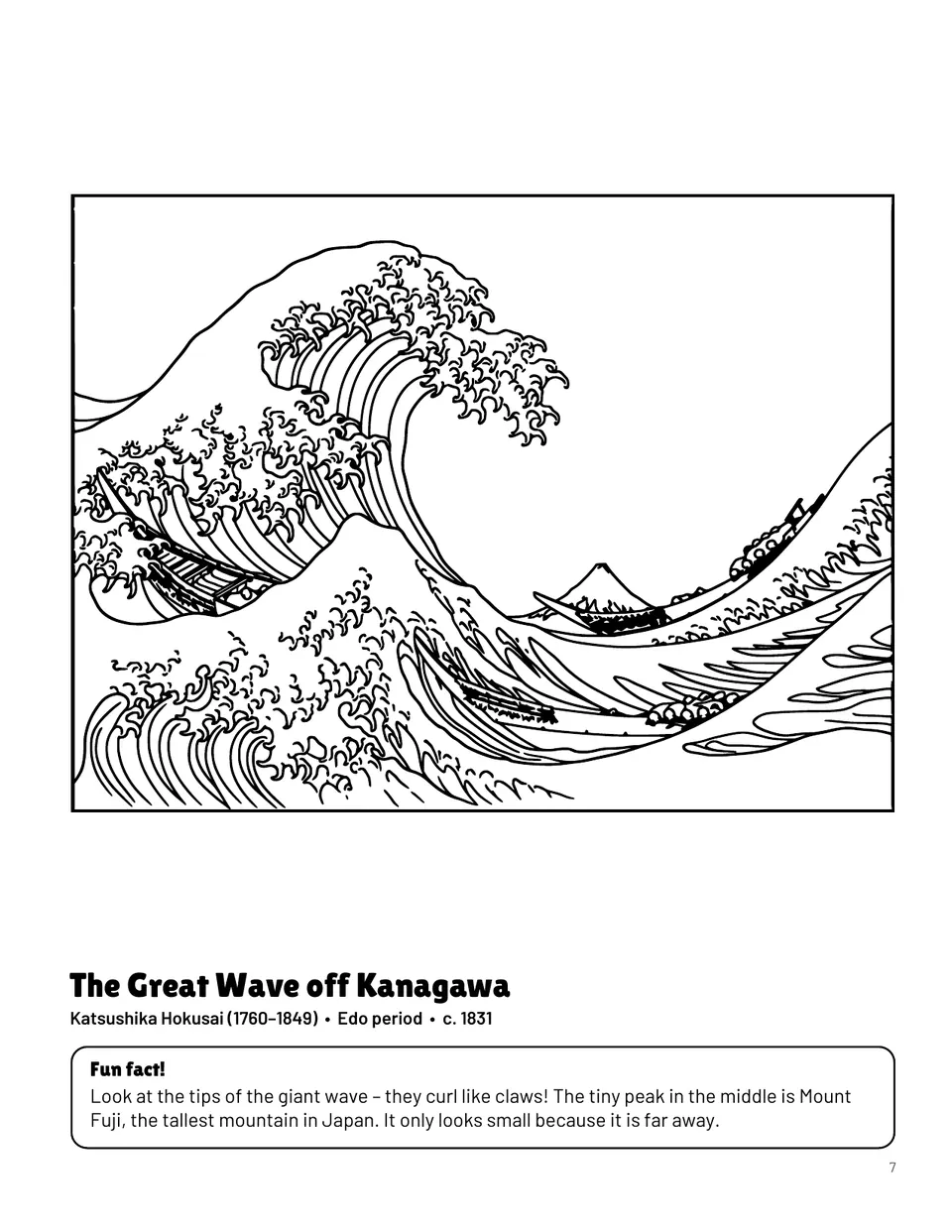
  • Inside page: line drawing of The Great Wave off Kanagawa by Katsushika Hokusai with a fun fact box

    The Great Wave off Kanagawa – Hokusai, c. 1831

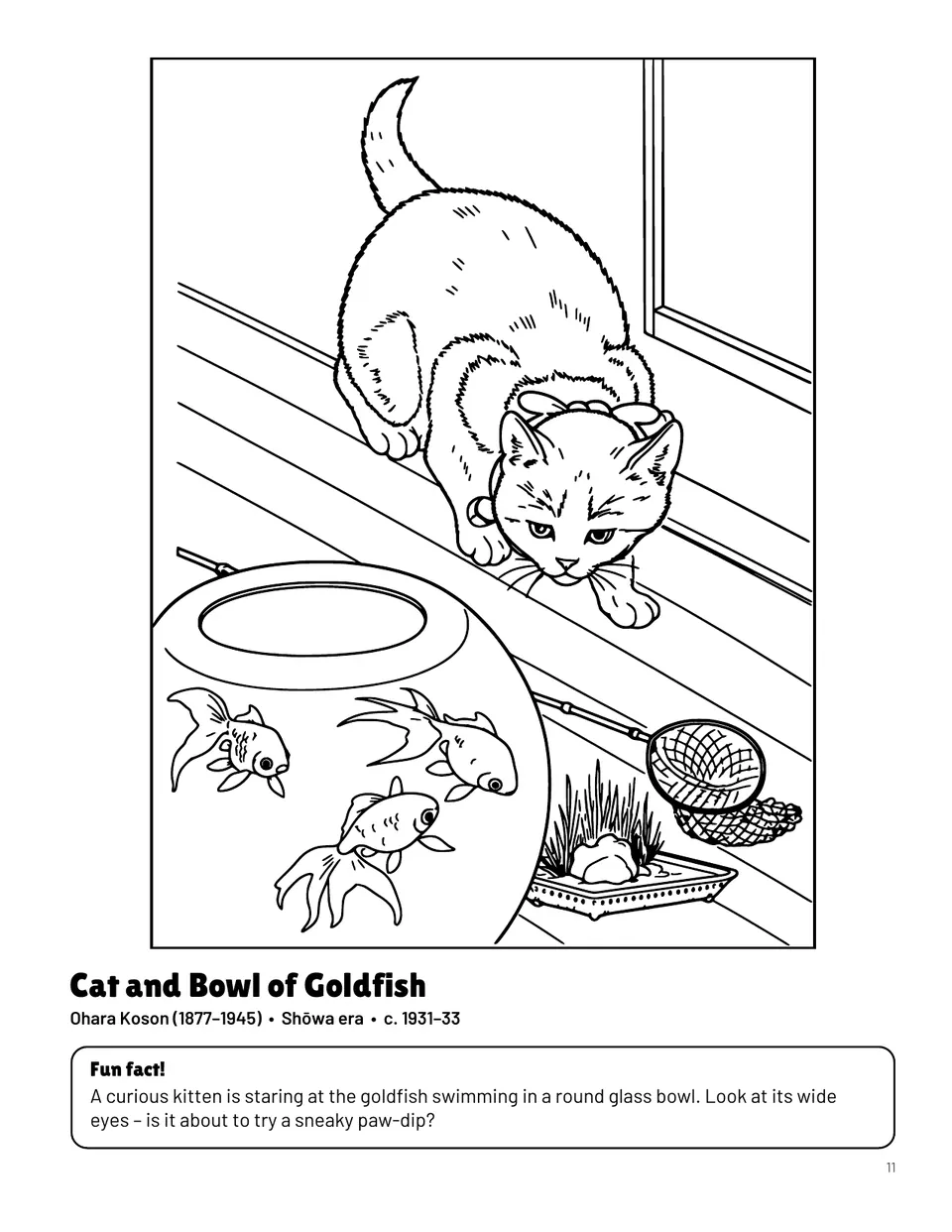
  • Inside page: line drawing of Cat and Bowl of Goldfish by Ohara Koson

    Cat and Bowl of Goldfish – Ohara Koson, c. 1931–33

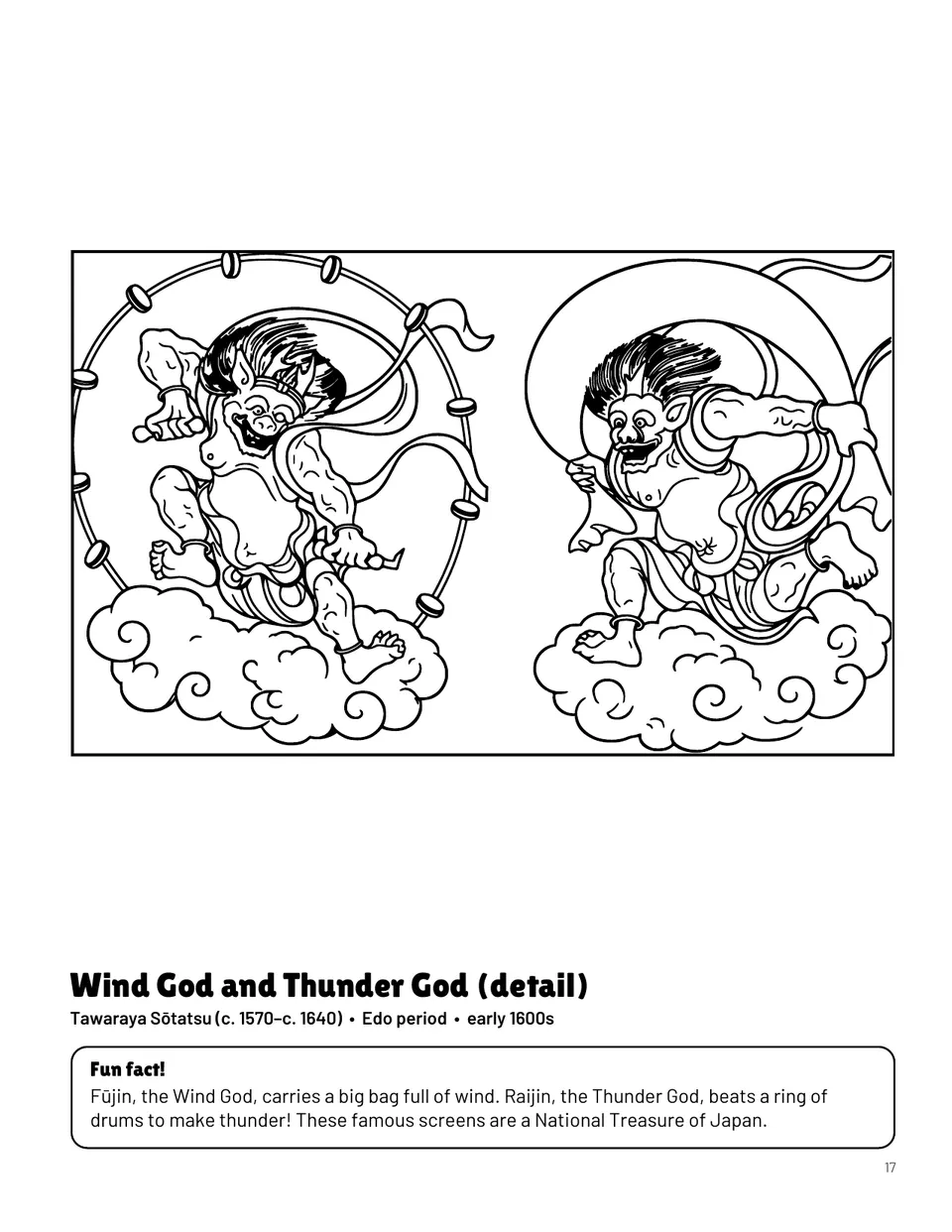
  • Inside page: line drawing of Wind God and Thunder God by Tawaraya Sōtatsu

    Wind God and Thunder God (detail) – Tawaraya Sōtatsu

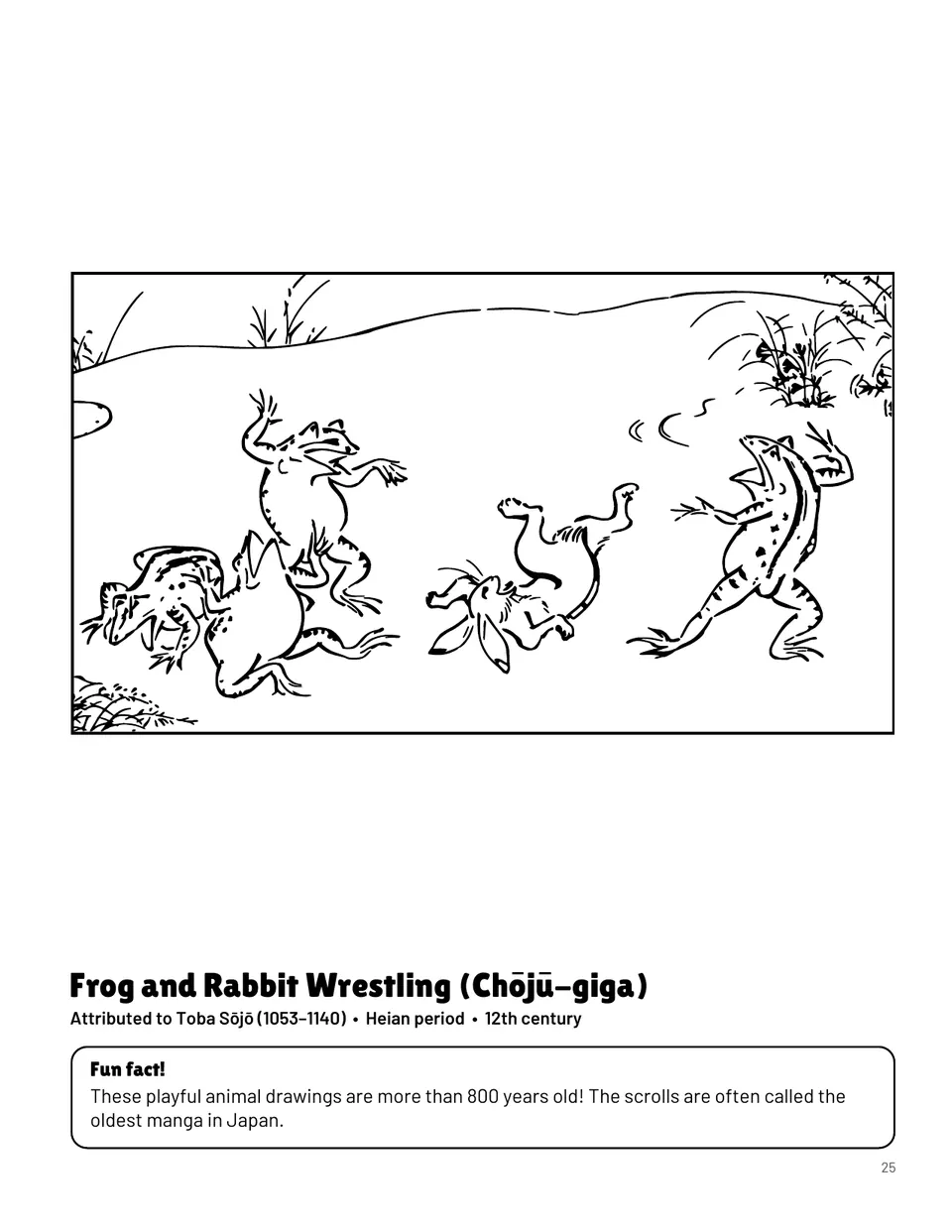
  • Inside page: line drawing of the frog and rabbit wrestling scene from the Chōjū-giga scrolls

    Frog and Rabbit Wrestling (Chōjū-giga) – 12th century

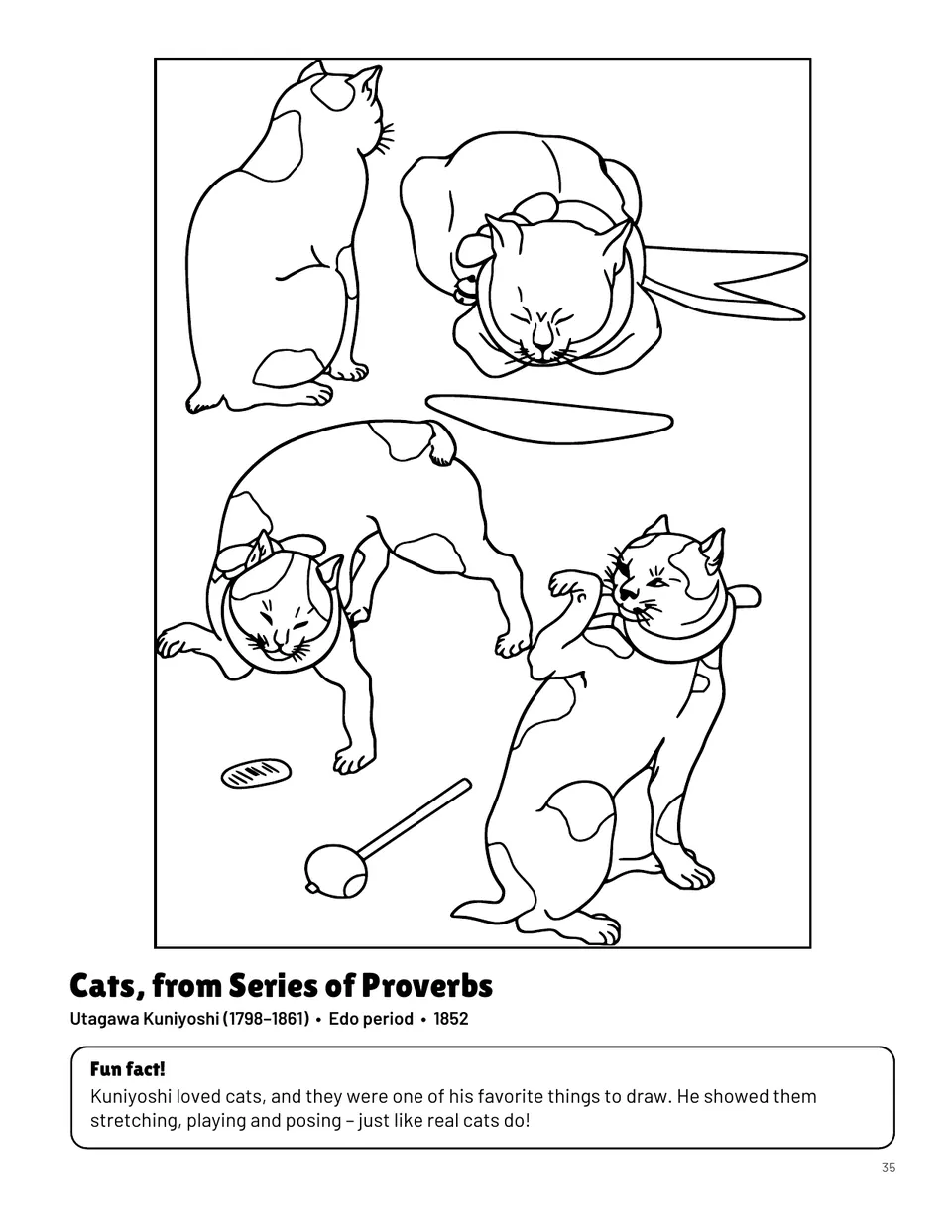
  • Inside page: line drawing of Cats, from Series of Proverbs by Utagawa Kuniyoshi

    Cats, from Series of Proverbs – Utagawa Kuniyoshi, 1852

  • Bonus page: My Japanese Art Gallery Checklist with small pictures of every artwork

    Bonus: the Japanese Art Gallery Checklist

See the originals

Color with the real artwork beside you

Every coloring page has a matching photo of the original artwork, in book order. Open it on a tablet while you color: tinyatelierpress.com/see/japan

See the original artworks

A taste of the fun facts

Every artwork in the book comes with a short fun fact like these.

  • The Great Wave off Kanagawa

    Katsushika Hokusai, c. 1831

    Look at the tips of the giant wave – they curl like claws! The tiny peak in the middle is Mount Fuji, the tallest mountain in Japan. It only looks small because it is far away.

  • Fine Wind, Clear Morning (Red Fuji)

    Katsushika Hokusai, c. 1830–32

    This print is nicknamed “Red Fuji”. Its Japanese title means “South Wind, Clear Sky” – the rows of little clouds show a calm, sunny morning when the mountain glows red.

  • Wind God and Thunder God (detail)

    Tawaraya Sōtatsu, early 1600s

    Fūjin, the Wind God, carries a big bag full of wind. Raijin, the Thunder God, beats a ring of drums to make thunder! These famous screens are a National Treasure of Japan.

  • Frog and Rabbit Wrestling (Chōjū-giga)

    Attributed to Toba Sōjō, 12th century

    These playful animal drawings are more than 800 years old! The scrolls are often called the oldest manga in Japan.

  • Cats, from Series of Proverbs

    Utagawa Kuniyoshi, 1852

    Kuniyoshi loved cats, and they were one of his favorite things to draw. He showed them stretching, playing and posing – just like real cats do!

  • Three Women Playing Musical Instruments

    Katsushika Ōi, c. 1818–44

    Ōi was the daughter of Hokusai, the artist of The Great Wave! She worked in his studio, and he praised her talent for painting people.

All 40 artworks in the book

Want to see them in color? See every original artwork next to its coloring page.

Artworks in Color the Masterpieces of Japan for Kids
#ArtworkArtistDatePeriodPage
1The Great Wave off KanagawaKatsushika Hokusai (1760–1849)c. 1831Edo period7
2Fine Wind, Clear Morning (Red Fuji)Katsushika Hokusai (1760–1849)c. 1830–32Edo period9
3Cat and Bowl of GoldfishOhara Koson (1877–1945)c. 1931–33Shōwa era11
4Ejiri in Suruga ProvinceKatsushika Hokusai (1760–1849)c. 1830–32Edo period13
5PuppiesMaruyama Ōkyo (1733–1795)late 1700sEdo period15
6Wind God and Thunder God (detail)Tawaraya Sōtatsu (c. 1570–c. 1640)early 1600sEdo period17
7Suidō Bridge and SurugadaiUtagawa Hiroshige (1797–1858)1857Edo period19
8Rabbit and Full MoonOhara Koson (1877–1945)c. 1900–1930Early 20th century21
9Sudden Shower over Shin-Ōhashi BridgeUtagawa Hiroshige (1797–1858)1857Edo period23
10Frog and Rabbit Wrestling (Chōjū-giga)Attributed to Toba Sōjō (1053–1140)12th centuryHeian period25
11Kajikazawa in Kai ProvinceKatsushika Hokusai (1760–1849)c. 1830–32Edo period27
12Two CranesOhara Koson (1877–1945)c. 1900–1930Early 20th century29
13Fukagawa Mannen BridgeUtagawa Hiroshige (1797–1858)1857Edo period31
14Irises (detail)Ogata Kōrin (1658–1716)c. 1701Edo period33
15Cats, from Series of ProverbsUtagawa Kuniyoshi (1798–1861)1852Edo period35
16Moon Pine, UenoUtagawa Hiroshige (1797–1858)1857Edo period37
17Long-eared Owl in a Ginkgo TreeOhara Koson (1877–1945)c. 1900–1930Early 20th century39
18Kirifuri Waterfall at Kurokami MountainKatsushika Hokusai (1760–1849)c. 1832Edo period41
19Three Women Playing Musical InstrumentsKatsushika Ōi (c. 1800–c. 1866)c. 1818–44Edo period43
20Two CarpOhara Koson (1877–1945)c. 1900–1910Early 20th century45
21Nihonbashi: Morning ViewUtagawa Hiroshige (1797–1858)c. 1833–34Edo period47
22Peonies and CanaryKatsushika Hokusai (1760–1849)c. 1834Edo period49
23Sailing Boats: MorningHiroshi Yoshida (1876–1950)1926Taishō era51
24The Persimmon TreeSakai Hōitsu (1761–1829)1816Edo period53
25Fukagawa Susaki and JūmantsuboUtagawa Hiroshige (1797–1858)1857Edo period55
26Rooster and SunflowersItō Jakuchū (1716–1800)c. 1759Edo period57
27Evening Snow at KanbaraUtagawa Hiroshige (1797–1858)c. 1833–34Edo period59
28Evening Cicada and SpiderKitagawa Utamaro (c. 1753–1806)1788Edo period61
29Kintai Bridge in Suō ProvinceKatsushika Hokusai (1760–1849)c. 1834Edo period63
30Kingfisher and IrisesOhara Koson (1877–1945)c. 1900–1930Early 20th century65
31Kinryūzan Temple, AsakusaUtagawa Hiroshige (1797–1858)1856Edo period67
32The Heron MaidenSuzuki Harunobu (c. 1725–1770)c. 1765–70Edo period69
33Kameido BridgeHiroshi Yoshida (1876–1950)1927Shōwa era71
34Bullfinch and Weeping CherryKatsushika Hokusai (1760–1849)c. 1834Edo period73
35The Monkey Bridge in Kai ProvinceUtagawa Hiroshige (1797–1858)c. 1841–42Edo period75
36Two Peacocks on a BranchOhara Koson (1877–1945)c. 1900–1930Early 20th century77
37Red and White Plum BlossomsOgata Kōrin (1658–1716)early 1700sEdo period79
38Birds and FlowersWatanabe Seitei (1852–1918)1887Meiji era81
39Snow on the Ayase RiverTakahashi Shōtei (1871–1945)1915Taishō era83
40Cypress Trees (detail)Kanō Eitoku (1543–1590)1590Momoyama period85

Book details

FormatPaperback
Pages90
Trim size8.5 × 11 in (21.59 × 27.94 cm)
InteriorBlack & white on white paper
Coloring pagesSingle-sided activity pages (blank backs)
CoverMatte
Ages6–12
GradesGrades 1–6
LanguageEnglish
Artworks40
Artists17
SeriesTiny Atelier Masterpieces, Book 2
PublisherTiny Atelier Press

Get the book

List price: $9.99 (US) · £7.99 (UK) · €9.99 (DE / EU)

In review at Amazon KDP. The Amazon links appear here as soon as the paperback is live.

Frequently asked questions

What age is Color the Masterpieces of Japan for Kids for?

It is made for children aged 6 to 12 (about grades 1–6), and it is a good fit for kids who love Japan, animals or woodblock prints.

Which artists are in the book?

17 Japanese artists, including Katsushika Hokusai, Utagawa Hiroshige, Utagawa Kuniyoshi, Kitagawa Utamaro, Itō Jakuchū, Ogata Kōrin, Tawaraya Sōtatsu, Katsushika Ōi, Ohara Koson and Hiroshi Yoshida. The full list of 40 artworks is on this page.

Are the artworks really public domain?

Yes. Every artist in the book died in 1950 or earlier, and the artworks date from the 12th century to the 1930s. The line drawings and the text in the book are new.

Are the pages single-sided?

Yes. Every coloring picture is printed on one side of the page with a blank back.

How is it different from Book 1?

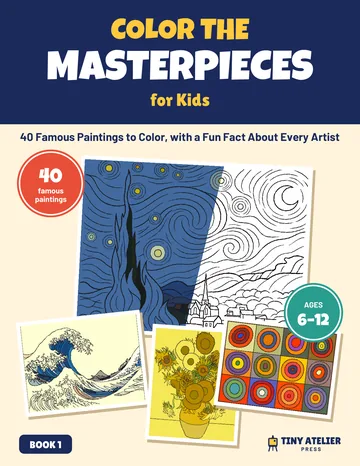
Book 1, Color the Masterpieces for Kids, tours 40 paintings from 18 countries. Book 2 goes deep on one country: 40 Japanese artworks by 17 artists across more than 800 years. Only The Great Wave and Sudden Shower over Shin-Ōhashi Bridge appear in both books.

How many pages does it have, and what size is it?

90 pages in a large 8.5 × 11 inch (21.59 × 27.94 cm) paperback with a matte crimson cover.

Also in the series

Book 1 · Ages 6–12

Color the Masterpieces for Kids

40 famous paintings from 18 countries and more than 400 years of art, from Leonardo da Vinci and Vermeer to Monet, Kandinsky and Hokusai.

  • 40 artworks
  • 90 pages
  • 8.5 × 11 in
  • Single-sided

Coming soon to Amazon

See inside the book