Quick picks
- For every age: a real sketchbook, a way to display finished art, and a museum day together.
- Ages 6–8: washable markers, chunky crayons, air-dry clay and coloring books with big, bold lines.
- Ages 9–12: quality colored pencils, a beginner watercolor set, a printmaking kit and art history books that introduce real artists.
- Best gifts combine making and learning: supplies plus a story about a real artist to inspire them.
Some children are always drawing: on napkins, in the margins of their schoolwork, on the steamed-up car window. For a child like that, the best gifts aren't more gadgets. They are things that make them feel like a real artist, give them new ways to make things and open the door to the great art of the past. Here are screen-free gift ideas that stay useful long after the wrapping paper is gone.
1. A real sketchbook
Loose printer paper says “scribble.” A proper sketchbook says “artist.” Choose one with heavier paper that can take markers and a little water, and a binding that lies flat. For younger children, a large size gives room for big, sweeping drawings; older children often prefer a smaller book they can carry everywhere. Writing their name and “Sketchbook No. 1” on the first page makes it feel like the start of something.
2. Better colored pencils (and a sharpener that works)
Cheap pencils with scratchy, pale leads can make a child think they are bad at drawing. A good set of colored pencils with soft, rich color is a genuine upgrade, especially for children aged 8 and up who like detail. Watercolor pencils are a fun twist: color as normal, then brush over the drawing with water to turn it into a painting. Add a good sharpener; it makes a surprising difference.
3. A beginner watercolor set with proper paper
Watercolor is magic for kids: colors bloom, mix and surprise them. A small pan set, two or three brushes of different sizes and a pad of real watercolor paper (which is thicker and doesn't buckle as badly) will last a long time. Include a jar for water and an old towel, and you've given them a complete little studio.
4. Coloring books of real masterpieces
For children who love coloring, a book built on real art offers something extra: every page is also a meeting with a famous artist. Look for books whose drawings stay faithful to the original paintings rather than turning them into cartoons, so that children can later recognize the real works. Single-sided pages are a practical bonus for marker fans, because nothing bleeds onto the next picture and finished pages can be framed.
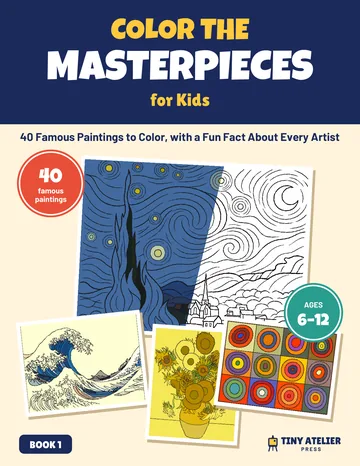
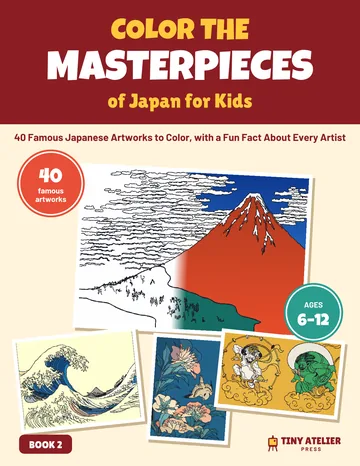
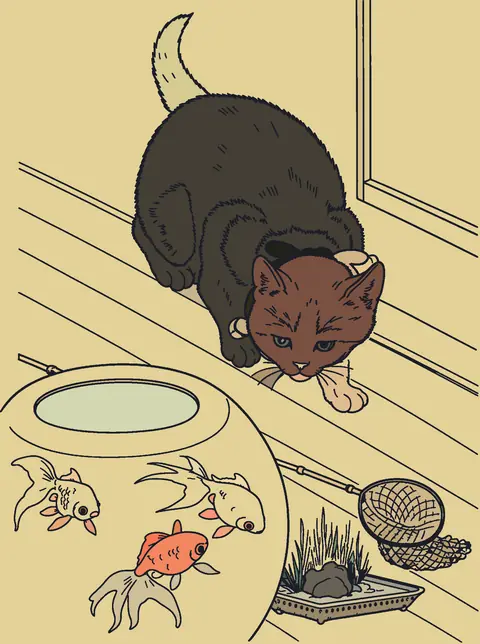
Our own series, Tiny Atelier Masterpieces, was made for exactly this: Book 1 features 40 famous paintings from 18 countries, and Book 2 40 Japanese artworks, each with a fun fact about the artist.
5. A simple printmaking kit
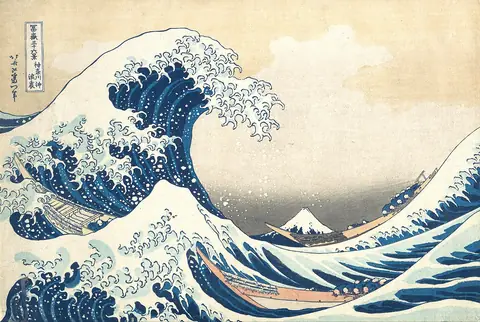
Printmaking feels like a magic trick: make one design and print it again and again. Beginner kits use soft foam sheets or easy-carve blocks, a small roller (called a brayer) and washable ink. Children can press a design into foam with a blunt pencil, roll on the ink and make a whole series of prints, just as Japanese artists like Hokusai did with carved wooden blocks. (Carving tools are best kept for older children, with an adult nearby.) It pairs beautifully with our guide to Hokusai and The Great Wave.
6. Clay for little sculptors
Air-dry clay needs no kiln and lets children make real objects to keep: small animals, bowls, beads, a tiny version of a famous sculpture. Add a few simple tools (a plastic knife, a toothpick and a rolling pin) and some paint for decorating once it has dried. For younger children, soft modeling clay that never hardens is easier on small hands.
7. A gallery of their own
One of the most encouraging gifts costs very little: a place to display their art. A string with clips across a bedroom wall, a few ready-made frames with easy-open backs, or a corkboard labeled “Gallery” tells a child that their work matters. Pair it with a coloring book with single-sided pages, and every finished picture can go straight up on the wall.
8. An art history book that tells stories
Children connect with artists as people. Look for illustrated biographies or art history books for young readers that tell the story behind a painting: why Van Gogh painted sunflowers for his guest room, or how Henri Rousseau painted jungles without ever leaving France. A book that includes good reproductions of the real artworks is ideal.
9. A museum day (the best experience gift)
Make a homemade “ticket” for a day at an art museum together: the train or bus ride, the visit and a hot chocolate afterwards. Many museums offer free or reduced entry for children, and many run family trails or activity sheets. Before you go, look at the museum's website with your child and let them choose two or three works to find. Searching for a painting they already know is thrilling.
10. A portable art kit
A small pencil case with a mini sketchbook, a few pencils, a travel watercolor set and a water brush turns waiting rooms, train rides and holidays into drawing time. Older children love the independence of having their own kit.
11. A studio box
Practical, but appreciated by parents and children alike: an apron or smock, a wipe-clean table cover and a storage box for supplies. When cleanup is easy, art happens more often.
12. Time together
Finally, the gift that can't be bought: a coupon for a weekly “atelier hour” together. Sit at the same table, each with your own paper, and make art side by side. You don't need to be good at it. Children love seeing grown-ups try, and it is time without screens for everyone.
Choosing by age
Ages 6–8: go for washable, chunky and big. Thick crayons, washable markers, big paper, soft clay and coloring pages with bold lines. Keep sets small, since too many choices can overwhelm.
Ages 9–12: children this age often want to get “better,” so quality materials pay off: good pencils, watercolor paper, printmaking tools and books about real artists. A challenge such as “color this painting exactly like the original” can become a project they are proud of.
A thoughtful gift bundle
Gift bundles feel special without being expensive. One idea: a coloring book of real masterpieces, a set of colored pencils and a postcard of one of the paintings inside, with a note that says, “Let's go and see this one day.” It combines making, learning and a promise of an adventure together.