The list at a glance
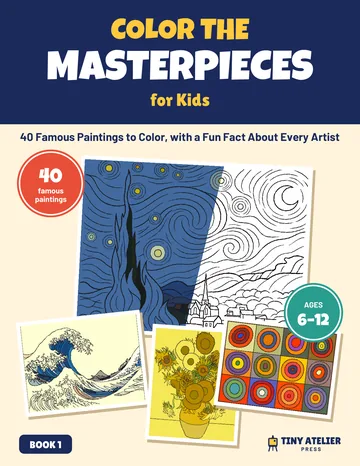
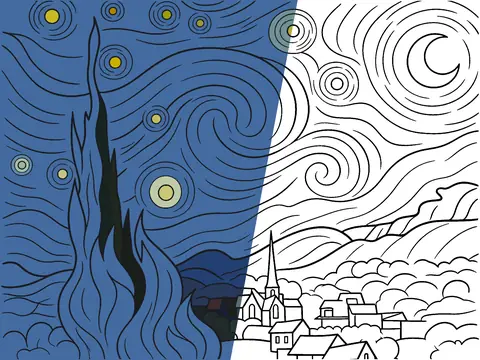
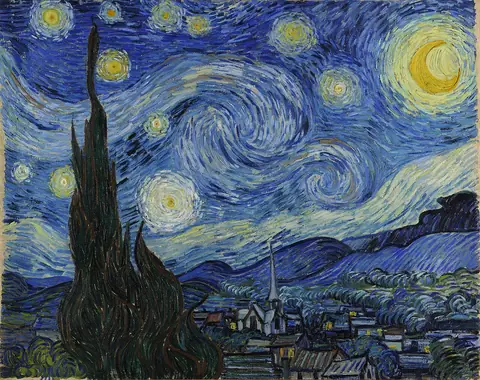
- The Starry Night, Vincent van Gogh, 1889
- Mona Lisa, Leonardo da Vinci, c. 1503–1519
- The Great Wave off Kanagawa, Katsushika Hokusai, c. 1831
- Girl with a Pearl Earring, Johannes Vermeer, c. 1665
- The Hunters in the Snow, Pieter Bruegel the Elder, 1565
- Bridge over a Pond of Water Lilies, Claude Monet, 1899
- Las Meninas, Diego Velázquez, 1656
- A Sunday on La Grande Jatte, Georges Seurat, 1884–1886
- Surprised!, Henri Rousseau, 1891
- Young Hare, Albrecht Dürer, 1502
There is no official list of paintings every child must know. But some artworks appear again and again in books, films, museums and everyday life, and children love being “in on it” when they recognize one. These ten were chosen because they are famous, full of things for young eyes to discover and each comes with a story a six-year-old can remember. Together they span nearly 400 years and travel from Italy to Japan.
For each painting you'll find what to look for, a fun fact and where you can see it in person.
1. The Starry Night – Vincent van Gogh (1889)
Look for: the swirling sky, eleven glowing stars, the crescent moon and the dark, flame-like cypress tree in front.
Fun fact: Van Gogh painted the view from his window at a hospital in Saint-Rémy, France, just before sunrise. The little village was added from his imagination!
Ask: Is the sky calm or windy? How can you tell?
Where: Museum of Modern Art, New York.
2. Mona Lisa – Leonardo da Vinci (c. 1503–1519)
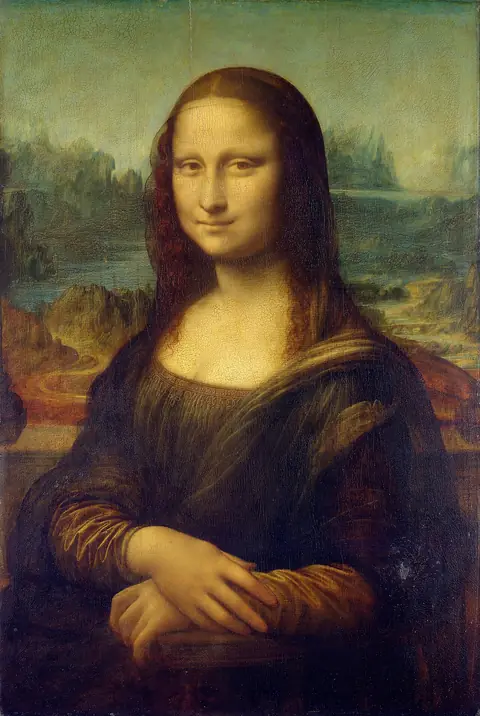
Look for: her folded hands, the faint smile and the winding roads and river in the misty landscape behind her.
Fun fact: In 1911 the Mona Lisa was stolen from the Louvre museum in Paris! It was missing for two years before it was found and brought back.
Ask: Is she happy, sad or keeping a secret?
Where: Musée du Louvre, Paris.
3. The Great Wave off Kanagawa – Katsushika Hokusai (c. 1831)
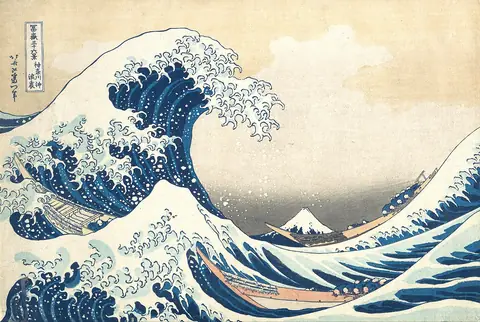
Look for: the claw-like foam, three boats full of rowers and tiny Mount Fuji in the distance.
Fun fact: It's not a painting, it's a woodblock print, made by pressing paper onto carved, inked wooden blocks. That's why many museums around the world own a copy.
Ask: Can you find Mount Fuji hiding behind the wave?
Where: impressions are held by many museums, including The Metropolitan Museum of Art (New York) and the British Museum (London). Read more in our Great Wave guide for kids.
4. Girl with a Pearl Earring – Johannes Vermeer (c. 1665)
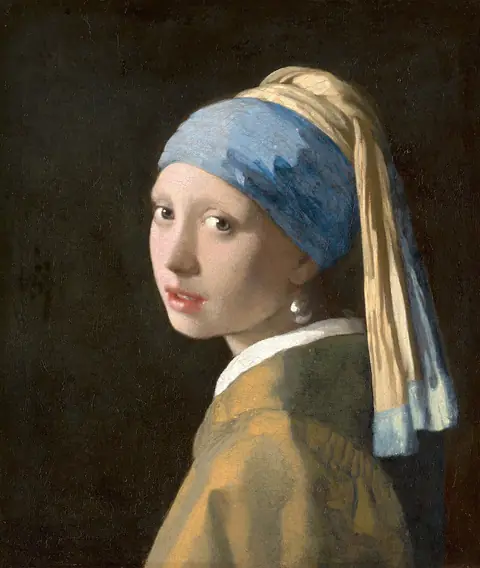
Look for: the bright blue and yellow turban, the shine on the pearl and the dark, empty background.
Fun fact: This isn't a portrait of a real, named person. It's a tronie, a Dutch painting of a face in a fancy costume, like an imaginary character.
Ask: What do you think she is about to say?
Where: Mauritshuis, The Hague, Netherlands.
5. The Hunters in the Snow – Pieter Bruegel the Elder (1565)
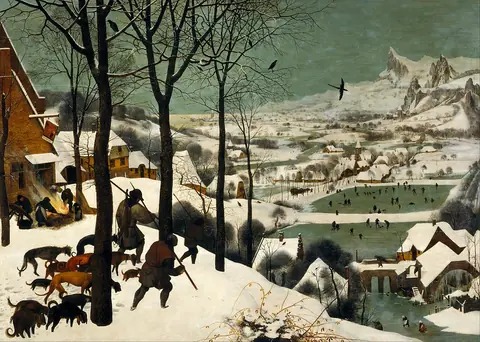
Look for: tired hunters and their dogs, a fire outside an inn, and people skating and playing on the frozen ponds far below.
Fun fact: This painting is part of a series about the different times of the year. Five of the paintings still survive, and this one shows deep winter.
Ask: How many people can you find on the ice?
Where: Kunsthistorisches Museum, Vienna, Austria.
6. Bridge over a Pond of Water Lilies – Claude Monet (1899)
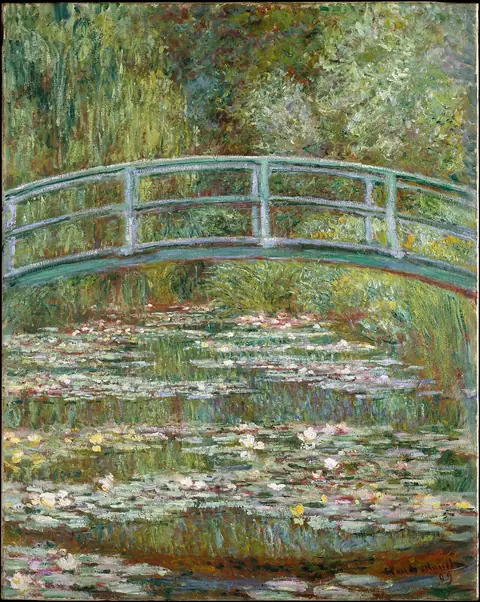
Look for: the curved Japanese-style footbridge, the floating lily pads and the way the colors blur into each other.
Fun fact: Monet painted the garden at his home in Giverny, France, with its bridge and water-lily pond, again and again for the rest of his life.
Ask: What time of day do you think it is? Why?
Where: Monet painted several versions; one hangs in The Metropolitan Museum of Art, New York.
7. Las Meninas – Diego Velázquez (1656)
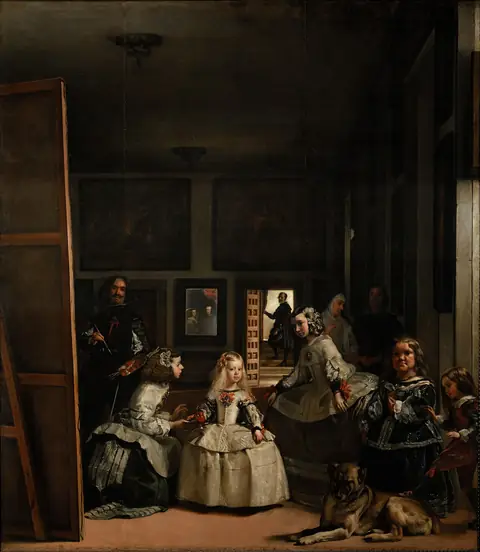
Look for: the little princess in the middle, the sleepy dog, and the man standing in the bright doorway at the back.
Fun fact: The painter on the left is Velázquez himself! And in the mirror at the back you can see the reflection of the king and queen.
Ask: If the king and queen are in the mirror, where are they standing?
Where: Museo del Prado, Madrid, Spain.
8. A Sunday on La Grande Jatte – Georges Seurat (1884–1886)
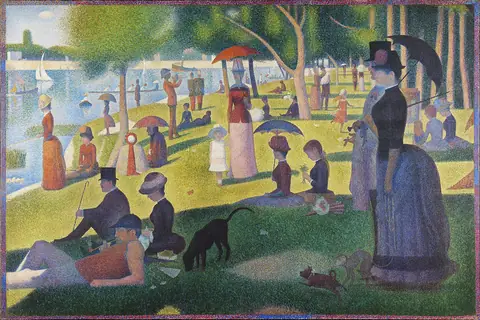
Look for: people relaxing by the river, a monkey on a leash, umbrellas and sailboats.
Fun fact: Seurat painted it with thousands of tiny dots of color, a technique called pointillism. It took him about two years to finish!
Ask: Try it yourself: can you color a small picture using only dots?
Where: Art Institute of Chicago.
9. Surprised! – Henri Rousseau (1891)
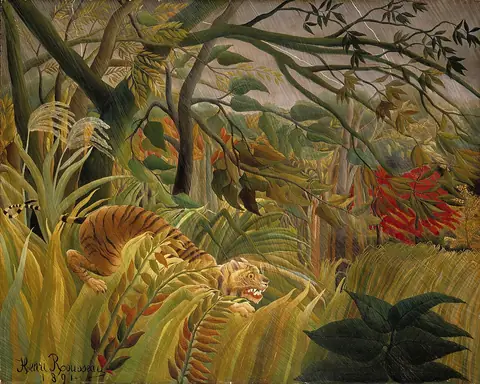
Look for: the startled tiger, the flash of lightning and the leaves bending in the wind and rain.
Fun fact: Rousseau painted jungles, but he never left France or saw a real jungle! He got his ideas from the greenhouses of a botanical garden in Paris.
Ask: What has surprised the tiger?
Where: National Gallery, London.
10. Young Hare – Albrecht Dürer (1502)
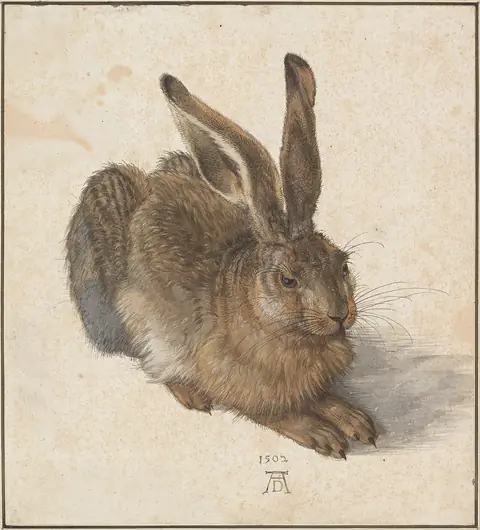
Look for: every single hair of the fur, the long whiskers and the tiny reflection of a window in the hare's eye.
Fun fact: Dürer painted this hare more than 500 years ago in watercolors. It looks so real that people still call it a masterpiece of looking closely.
Ask: Can you draw an animal at home while looking at it very carefully?
Where: Albertina, Vienna. Because watercolors fade in light, the original is shown only rarely.
How to use this list with children
Don't try to cover all ten at once. Pick one painting a week, look at a good image together, ask the question and share the fun fact. Many families then let children color a line drawing of the same painting, which keeps their eyes on the details a little longer. You'll find more ideas in our guide on teaching art history to kids with coloring.
And if you ever travel to New York, Paris, Vienna, Madrid, London, Chicago or The Hague, let your child plan a visit to “their” painting. Seeing a masterpiece in person after coloring it at home is a moment children remember.